
CORSICA 5 contains an update to the underlying Finite Element Model underpinning PIP. This model enables more accurate, repeatable and rapid testing to take place using all PLX products. This model update may mean slightly different results are produced by PIP compared to previous software versions.
1. Increased accuracy
The model update has improved the accuracy of PIP measurements by a small but significant amount. This is especially true for materials which undergo a low amount of work hardening.
|
CP1 Data |
Yield Stress [MPa] |
UTS [MPa] |
|
Tensile |
330 |
340 |
|
CORSICA 4 |
303 ± 16 |
315 ± 10 |
|
CORSICA 5 |
313 ± 8 |
322 ± 6 |
Accuracy over 30 tests has increased on average, and the standard deviation of results has decreased.
2. Single indent protocol
CORSICA 5 will now only perform a single indent depth for all materials. Previous versions used a shallow indent for materials that did not work harden much and then performed a second indent for materials that did. This was done to ensure that the material response for materials that necked quickly was representative of its behaviour at lower strains.
This update has improved the performance of the model such that there is no loss of accuracy when generating larger strains during indentation for materials that neck quickly (Figure 1). As such, the PIP procedure shall now only perform a single indentation with a depth of 150-200 µm.
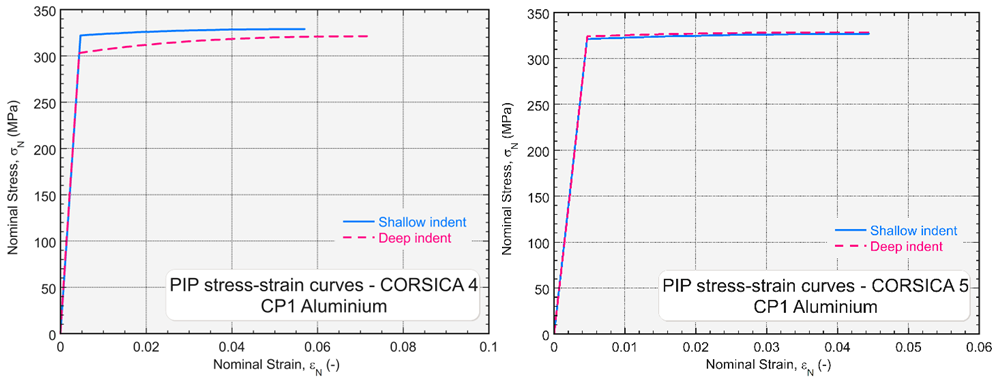
Figure 1 The updated FE model in CORSICA 5 ensures consistent data for alloys across the indentation range.